History

HISTORY OF OCEAN UNIVERSITY OF CHINAHistory
  • 1924The Private Qingdao University

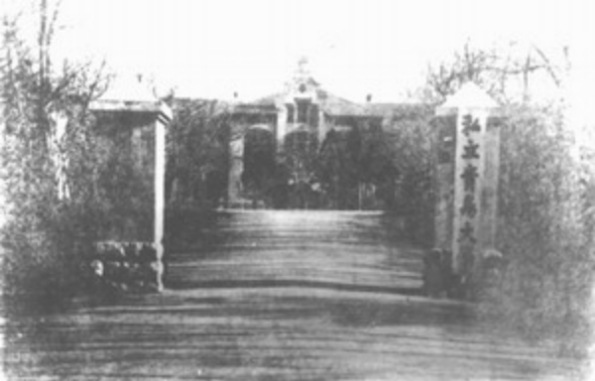
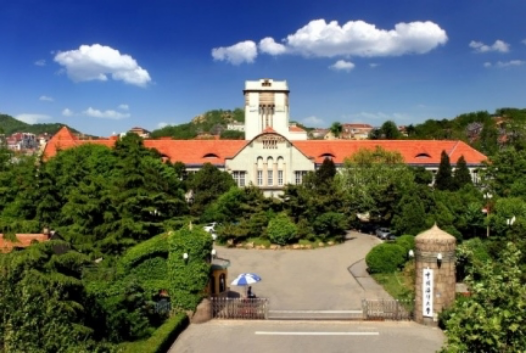
    Established in 1924, the Private Qingdao University (now known as Ocean University of China) was the very first modern institution of higher education established by the Chinese in Shandong Province. Forty engineering and business students enrolled in the university’s inaugural year, and undertook their education on the site of the former German Bismarck Barracks, on what is now the university’s picturesque Yushan campus. The university adhered then, as it does now, to the aim of imparting expert knowledge and cultivating talented professionals to meet the needs of the country.

    Gate of Private Qingdao University (The building facing the gate is now the Oceanography Hall of Yushan Campus)

  • 1929National Qingdao University

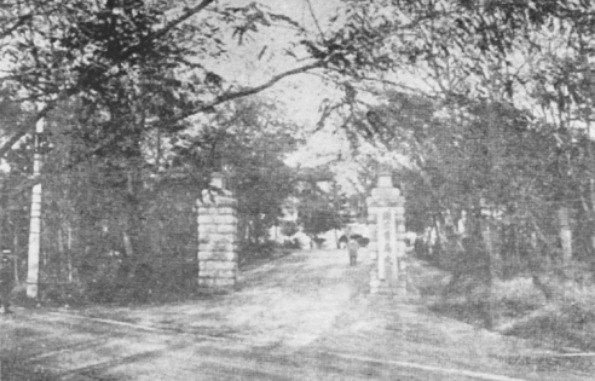
    In June 1929, the Nanjing Nationalist Government took over the campus and property of the Private Qingdao University and Shandong Provincial University, and approved the establishment of National Qingdao University. In April 1930, Professor Yang Zhensheng, dean of the School of Humanities at Tsinghua University, was appointed president. Following the principles of academic freedom and inclusiveness, he widely recruited renowned scholars and academic professionals to teach at the university. At his suggestion, marine-related disciplines such as coastal biology, oceanography and meteorology were set up, and coastal biology became a priority discipline of the Biology Department. This laid the foundation for OUC’s distinctive strengths in marine disciplines.

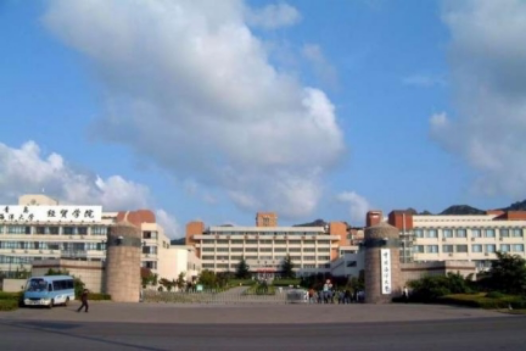
    Gate of National Qingdao University

  • 1932National Shandong University

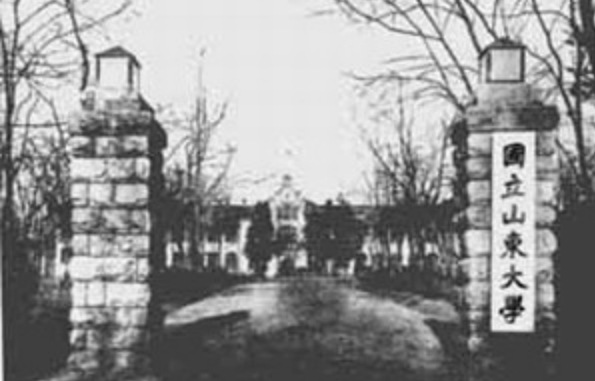
    In July 1932, the university was renamed National Shandong University. Professor Zhao Taimou, former dean of academic affairs at National Qingdao University, was appointed president. By continuing the recruitment of famous scholars, improving the institution’s infrastructure, expanding schools and departments, tightening teaching management, and encouraging scientific research, he guided the university into its first golden age.


    In July 1937, with the full outbreak of the Chinese People’s War of Resistance against Japanese Aggression, National Shandong University was ordered to move south, during which it suffered heavy losses. By order of the Ministry of Education of the Nationalist Government, the university had to suspend operations temporarily.


    In the spring of 1946, National Shandong University resumed its operations in Qingdao, and Professor Zhao Taimou was once again appointed its president. The faculty was reinforced, the academic structure further expanded, and teaching facilities improved, laying a solid disciplinary and talent foundation for the university’s subsequent development.

    Gate of National Shandong University

  • 1951Shandong University

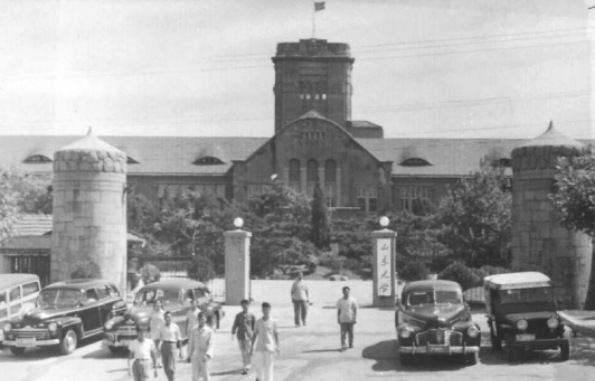
    With the liberation of Qingdao on June 2, 1949, National Shandong University gained its revitalization. In 1951, the university merged with East China University to form Shandong University, with Professor Hua Gang as its president and secretary of the Party Committee. The newly merged institution reached an unprecedented scale, comprising five schools, eighteen departments and two research institutes. The goal of this new institution was to strike a balance between arts and sciences while maintaining its focus on biological and marine-related fields, an ambition that ushered the university into its second golden age.

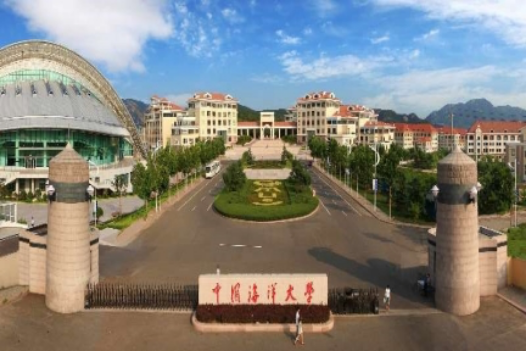
    Gate of Shandong University (Currently Gate 1 of Yushan Campus)

  • 1958Shandong College Of Oceanography

    In October 1958, the main campus of Shandong University was moved to Jinan. Among the nine Departments of the university, the Department of Oceanography, the Department of Fisheries, the Department of Geology, the marine biology program of the Department of Biology, and some teaching and research groups of the Departments of Physics and Chemistry, along with some of the staff directly administered by the teaching and research groups, remained in Qingdao. They continued to operate the university under the name Shandong University (Qingdao) and established a Party committee and a university affairs committee, with the aim of building a university oriented toward the ocean. In March 1959, with the approval of the CPC Central Committee, Shandong College of Oceanography, the first higher education institution in marine sciences in the People’s Republic of China, was established. Professor Qu Xiangsheng served as its president and secretary of the Party committee. This marks the end of the university’s 30-year period of being a part of Shandong University.
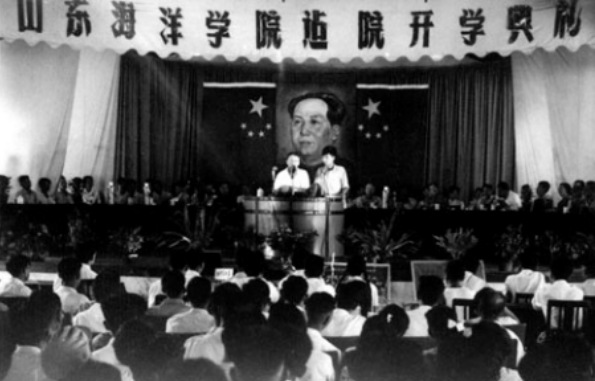
    Inaugural Meeting of Shandong College of Oceanography
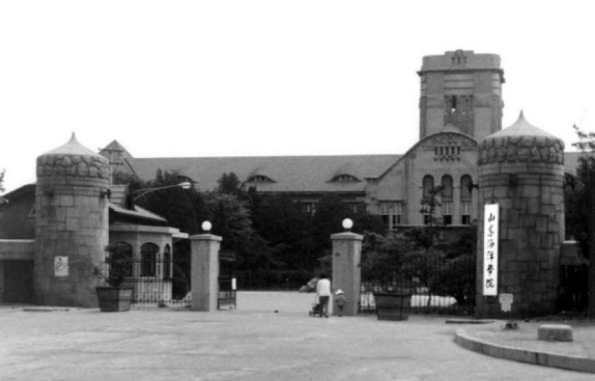
    Gate of Shandong College of Oceanography


    In October 1960, 64 key national universities were announced in The Decision of the CPC Central Committee on Increasing the Number of Key National Universities. Shandong College of Oceanography became one of China’s 13 key comprehensive universities, opening a new historical stage of development driven by distinctive strengths in marine studies.


    In the early 1960s, despite the severe national economic difficulties, China continued to attach great importance to marine research and education, investing heavily in the building of Dong Fang Hong, China’s first 2,500 DWT research vessel.

  • 1988Ocean University Of Qingdao

    From the 1980s onwards, guided by national and societal needs, the university adjusted its disciplinary and program structure while ensuring the strong development of marine and fisheries disciplines. It actively promoted the coordinated growth of basic disciplines, humanities and social sciences, applied disciplines and emerging interdisciplinary fields. In 1988, the university was renamed Ocean University of Qingdao. In 1994, it came under the joint administration of the State Education Commission and the People’s Government of Shandong Province, receiving key support from both. In 1996, the university was approved as one of the first key national universities in Project 211 (China’s top 100 universities). This success was followed by the university’s inclusion in Project 985 (China’ s top 40 universities), an achievement that was jointly supported by the Ministry of Education, the Shandong Provincial Government, the State Oceanic Administration, and the Qingdao Municipal Government.

  • 2002Ocean University Of China

    In October 2002, the university adopted its present name, Ocean University of China.


    Entering the 21st century, OUC has pursued an overall development strategy of highlighting distinctive strengths, ensuring quality, and achieving strengths before seeking scale. Since then, OUC has embarked on its journey towards a high-level, comprehensive university with distinctive strengths. The university is dedicated to cultivating top-tier, innovative, and well-rounded talent with a strong sense of national identity, social responsibility, and an international outlook, along with solid scientific and humanistic grounding and strong innovation and practical abilities. With the mission of training leading professionals for China’s maritime undertakings, the university has achieved notable progress in talent development, scientific research, social service, cultural inheritance and innovation, and international cooperation, steadily advancing its goal of becoming a high-level university with distinctive strengths. In September 2017, OUC was included among the first batch of A-Category selected under China’s plan to build world-class universities, continuing to benefit from the support of the Ministry of Education, the Ministry of Natural Resources, the Shandong Provincial Government, and the Qingdao Municipal Government. The university aims at becoming a world-class comprehensive university with a strong emphasis on ocean sciences by 2030, and a world-class university with distinctive characteristics by the middle of this century.

    Yushan Campus, OUC

    Fushan Campus, OUC

    Laoshan Campus, OUC

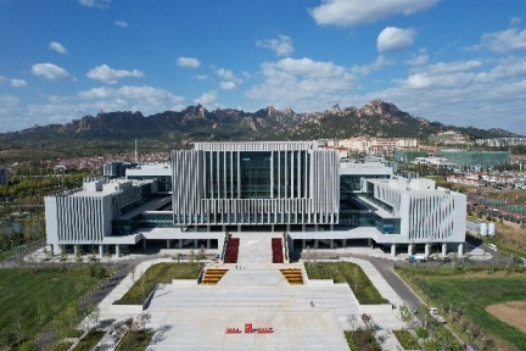
    West Coast Campus, OUC