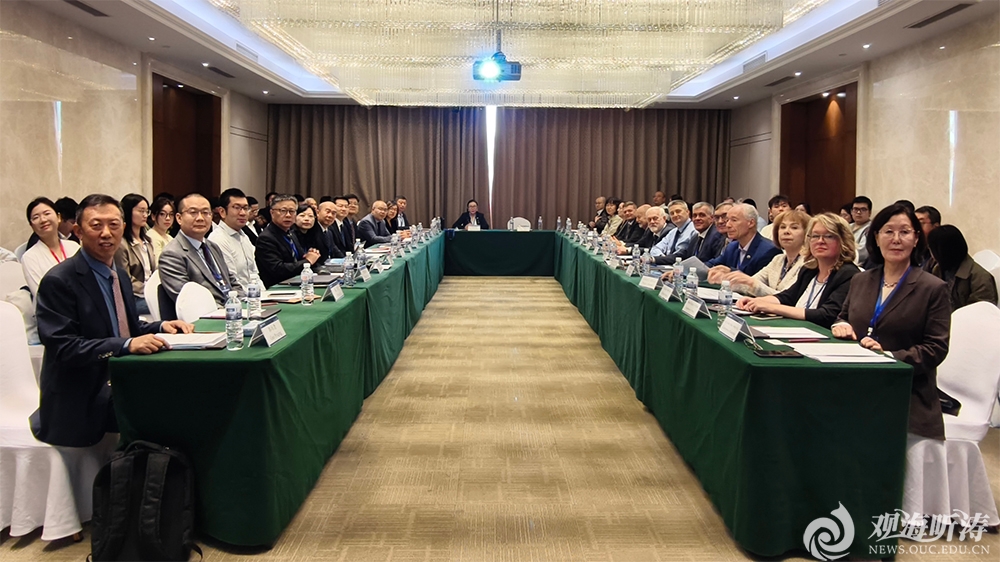
Recently, the 15th China-Russia Arctic Workshop was held in Qingdao, jointly organized by Ocean University of China (OUC) and St. Petersburg State University (SPbU).
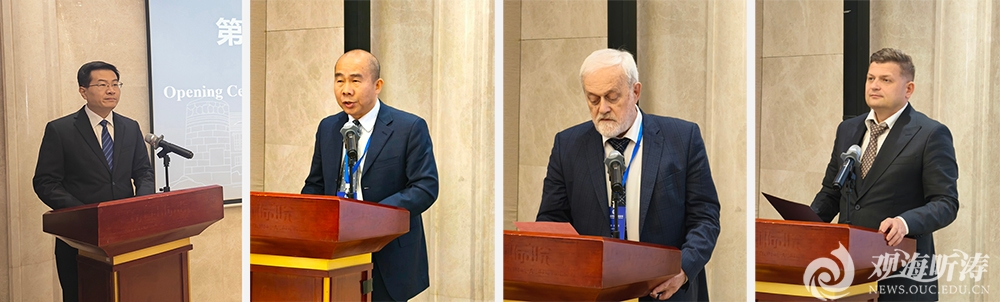
In his remarks, Wang Xuepeng, Vice President of OUC, noted that OUC was among the first universities in China to conduct polar research. By participating in polar scientific expeditions and developing laboratory platforms and research teams focused on polar ocean processes and global climate change, the university has systematically strengthened its polar research and made significant progress. OUC remains firmly committed to global engagement, actively participating in and promoting international cooperation and exchanges in marine science and education. This year’s workshop coincides with the China-Russia Years of Education. OUC will continue to deepen bilateral academic exchanges, build the China-Russia Arctic Workshop into a signature program, and contribute to polar research and the sustainable development of the Arctic.
Long Wei, Deputy Director of the Chinese Arctic and Antarctic Administration, noted that China is an active participant, builder and contributor in Arctic Affairs. He added that, during the China-Russia Years of Education and against the backdrop of the sustained positive momentum in bilateral relations, it is of great practical significance for scholars from both countries to participate in the workshop and engage in exchanges and cooperation.
Victor Dyomin, First Vice-Rector of Tomsk State University (TSU) in Russia, said that TSU looked forward to deepening research cooperation with OUC in fields such as climate change in the polar regions and marine science, while expanding faculty and student exchanges and joint education programs. Alexey Chernukhin, Director of the St. Petersburg Information and Business Center in Shandong Province, read out a congratulatory letter to the workshop from Alexander Belsky, Chairman of the Legislative Assembly of St. Petersburg. The letter noted that OUC and SPbU, as leading universities in the sister cities of Qingdao and St. Petersburg, had made important contributions over the years to strengthening the China-Russia comprehensive strategic partnership of coordination for a new era.
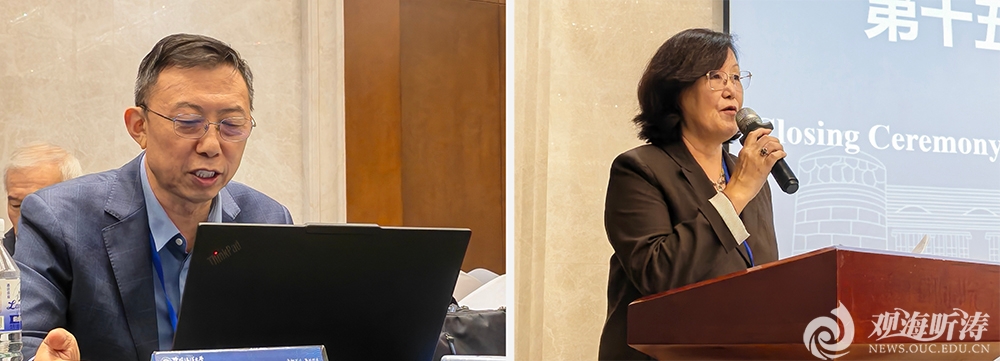
The workshop was held under the theme “China-Russia Cooperation in the Far East and the Arctic: Historical Context, Current Challenges, and a Shared Vision.” Participants engaged in in-depth discussions on the historical evolution, practical pathways, and emerging issues concerning China-Russia cooperation in the Far East and the Arctic, reaching consensus on a range of issues. They agreed that, after years of development, research on China-Russia cooperation in the Far East and the Arctic was confronting new questions arising from changing times. They called for continued use of the workshop as a platform to deepen dialogue between the two countries’ academic communities, expand research and educational cooperation, and lay a solid foundation for long-term bilateral exchanges on Arctic affairs. Participants also said they would continue to promote faculty and student exchanges, academic visits and collaborative research, generate further outcomes in support of the development of the “Polar Silk Road,” and contribute to sustainable development in the Arctic.
More than 80 representatives from universities, research institutes, businesses and other organizations in China and Russia attended the workshop.
Founded in 2012, the China-Russia Arctic Workshop is hosted alternately by institutions in the two countries. To date, the workshop has been held for 15 consecutive editions and has developed into an institutionalized platform for regular exchanges between Chinese and Russian Arctic scholars, yielding substantial results.