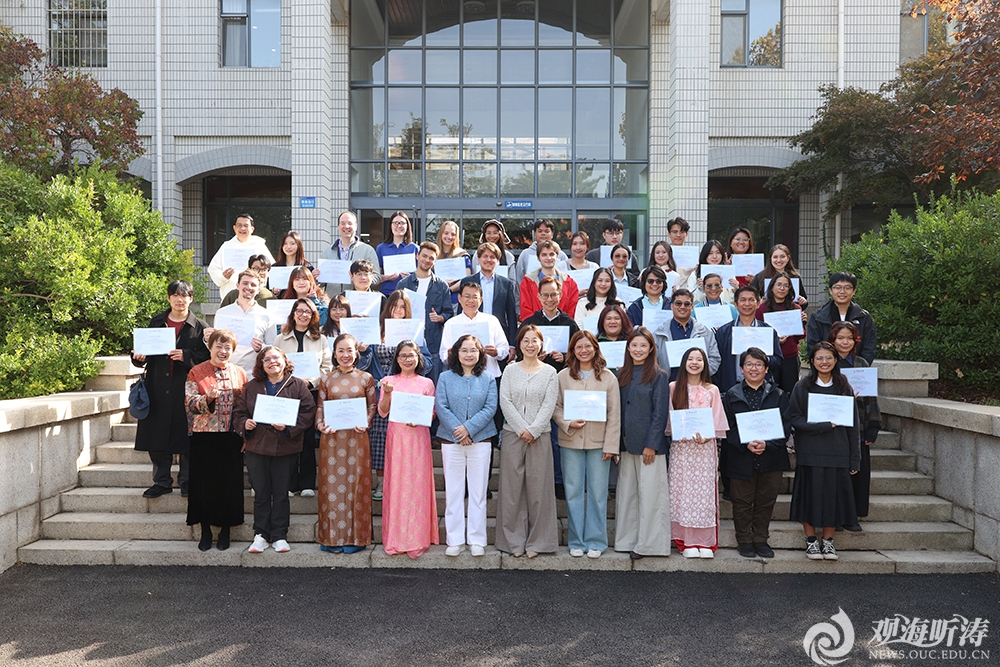
From October 18 to 31, the 2026 International Marine Summer Camp on “Marine Sustainable Development and Mutual Learning among Civilizations” was held at Ocean University of China (OUC). A total of 47 faculty members and students from 12 universities and research institutes in 10 countries participated in the event. Focusing on marine fisheries, marine environmental science, marine foods and pharmaceuticals, and marine humanities, the camp provided an international platform for cross-border and interdisciplinary exchange through academic lectures, laboratory tours, industry visits, academic presentations, and cultural experiences.
On October 19, the opening ceremony of the summer camp was held at OUC’s Yushan Campus. Wang Xuepeng, Vice President of OUC, attended the ceremony and delivered remarks. He noted that marine sustainable development is an important issue facing humanity as a whole. Drawing on collaborative platforms such as the International Alliance of Marine-Related Institutions (IAMRI), the Sino-Thai Academic Center on Marine and Fishery Sciences, and the International Antarctic Institute (IAI), OUC organized the camp in the hope that participants would deepen their knowledge of the ocean, enhance mutual understanding, build consensus on cooperation, and contribute to advancing marine sustainable development and building a maritime community with a shared future. Faculty representatives from Kasetsart University in Thailand and the Federal University of ABC in Brazil, along with a student representative from the University of Alaska in the United States, spoke in turn, expressing their hopes for deeper academic exchanges, stronger friendships among young people, and broader practical cooperation.
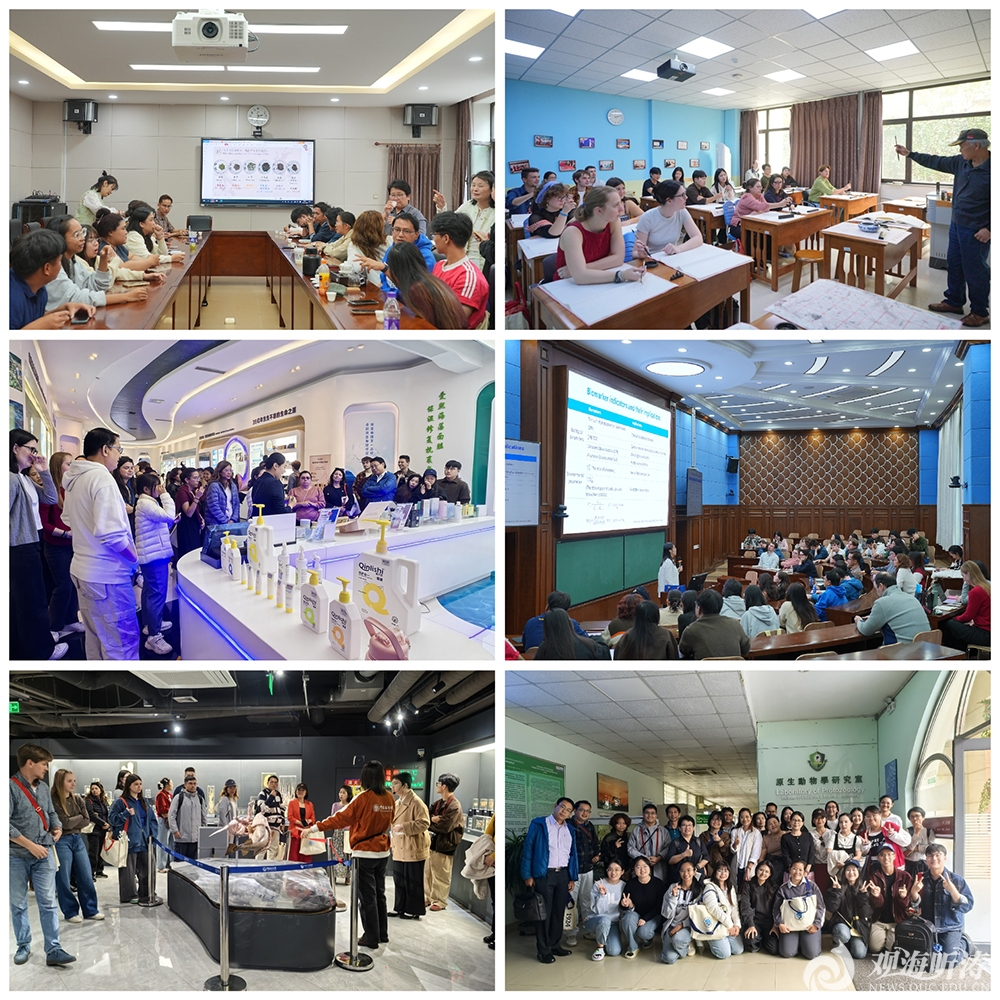
Drawing on OUC’s strengths in marine-related disciplines, the camp organized a series of interdisciplinary lectures. Experts and scholars in fisheries, oceanic and atmospheric sciences, chemistry and chemical engineering, law, international affairs and public administration, food science and engineering, and medicine and pharmacy presented cutting-edge research on the sustainable development of fisheries and aquaculture, climate change, marine chemosynthetic ecosystems, marine drug discovery, the legal order in the polar regions, integrated coastal zone management, and the marine carbon cycle. Participants toured laboratories at the College of Fisheries and the College of Food Science and Engineering, visited the Marine Biology Museum and the OUC History Museum, and boarded the marine research and training vessel “Dong Fang Hong 2,” gaining a deeper understanding of advances in marine research and practices in advancing ecological civilization in the fisheries sector.
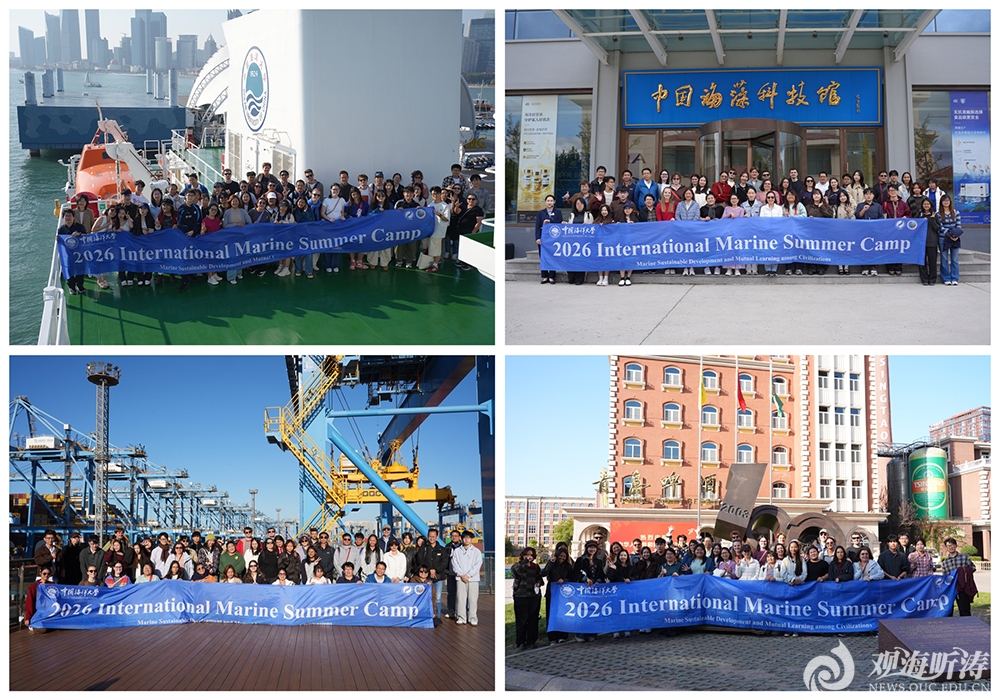
To better integrate theoretical learning with industry practice, the camp organized visits to Qingdao Bright Moon Seaweed Group, the Qingdao Port Fully Automated Container Terminal, and the Tsingtao Beer Museum, where participants learned about the development and utilization of marine biological resources, the growth of marine industries, and smart port development. Traditional Chinese cultural activities such as calligraphy and tea art, along with visits to the Dabaodao Cultural and Leisure Block, the Qingdao Olympic Sailing Center, and the Qingdao City Exhibition Hall, offered participants a window into Chinese culture and Qingdao’s urban development, further promoting cross-cultural exchange and mutual understanding.
From October 27 to 29, faculty representatives from participating universities in the United States, Thailand, South Korea, Vietnam, Russia, Brazil, and Malaysia gave academic presentations and shared research findings and practical experience on topics including aquaculture seed production, the blue economy, sustainable aquaculture, the education and training of marine professionals, algal biotechnology, and blue innovation. Faculty members and students from different countries and institutions engaged in dialogue, drawing on their respective disciplinary strengths and development experience. This moved academic exchange beyond the presentation of research findings toward the mutual sharing of experience, helping lay the groundwork for deeper multilateral cooperation and broader international collaboration.
On October 30, the camp’s closing ceremony was held at OUC’s Yushan Campus. Wu Hui, Dean of OUC’s School of International Education, and Wan Min, Vice Dean of the College of Fisheries, presented certificates of completion to the participants. Li Jingyu, Executive Director of the Sino-Thai Academic Center on Marine and Fishery Sciences, presided over the ceremony. Participant representatives shared what they had learned, reflected on their experiences during the exchange, and offered comments and suggestions. Participants from different countries also gave performances showcasing their distinctive national cultures, celebrating cultural diversity and conveying friendship and goodwill.
With broad participation, a rich program, and varied formats, the camp highlighted OUC’s strengths in marine-related disciplines and its distinctive approach to international engagement. The camp brought together marine science, industry practice, and people-to-people exchange, deepening participants’ understanding of marine sustainable development and global ocean governance and promoting exchange and mutual learning among civilizations. It also provided fresh impetus for deeper cooperation between OUC and overseas universities in education and research, as well as broader, substantive international cooperation in marine-related fields.