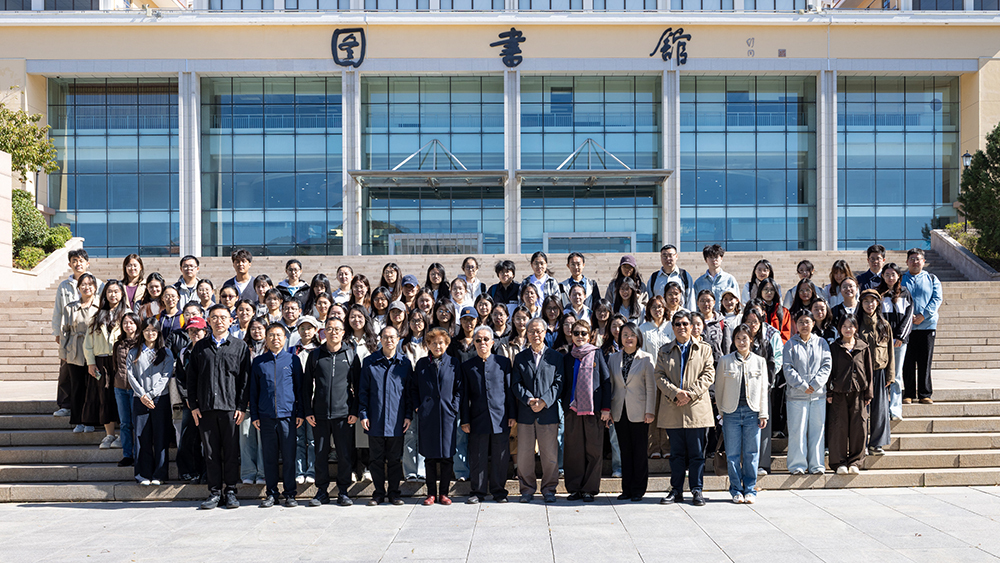
From October 19 to 22, academic events for Ocean University of China (OUC)’s 2026 Wang Meng Literature Week were held on the Laoshan Campus. Wang Meng, recipient of the national honorary title “People’s Artist” and former Minister of Culture; Shan Sanya, a senior journalist with Guangming Daily and Wang Meng’s wife; Professor Wong Wai-leung of the Chinese University of Hong Kong and his wife, Chen Jie; Wang Xuepeng, Vice President of OUC; and approximately 200 faculty members and students attended the event.
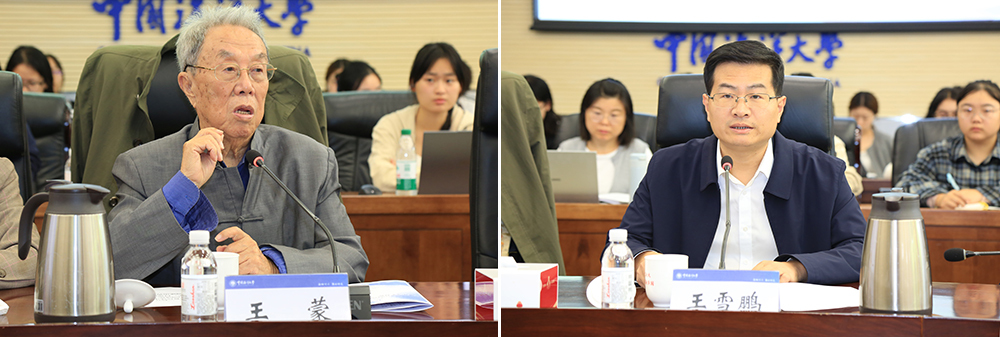
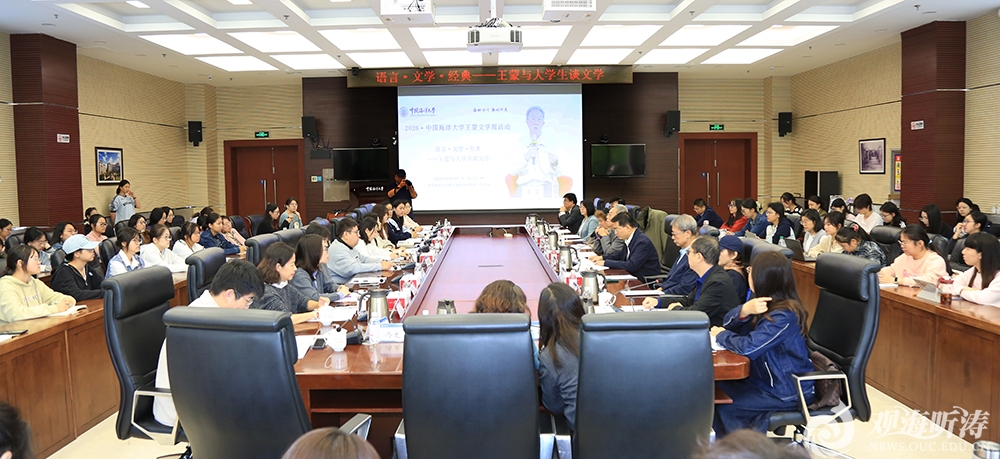
On the morning of October 20, a themed event titled “Language, Literature, and Classics: Wang Meng Talks Literature with University Students” was held in Conference Room 1 of the Library on the Laoshan Campus. In his remarks, Vice President Wang Xuepeng noted that since beginning work on his novel Long Live Youth in 1953, Wang Meng has written continuously for more than seven decades, producing over 20 million Chinese characters and earning the affection and respect of readers. Since joining OUC in 2002, Wang Meng has pioneered the university’s Writer-in-Residence Program and its Renowned Scholar Curriculum. He also initiated the “Science, Humanities, and the Future” Forum, which has been held multiple times, along with other signature high-level academic events. He has devoted tremendous effort and made irreplaceable contributions to the development of OUC’s humanities and the flourishing of its campus culture. Vice President Wang Xuepeng noted that Wang Meng studies have become a distinctive academic hallmark of OUC, with considerable scholarly and interdisciplinary influence, significantly advancing the high-quality development of the university’s humanities and its efforts to build a world-class university. With the Research Institute for Wang Meng’s Literature Works as its primary platform, OUC will continue to support in-depth research on Wang Meng and foster new scholarly achievements.
During the discussion, Wang Meng engaged in an in-depth exchange with faculty and students on reading and scholarship, the appreciation of classics, and language cultivation. He encouraged students to regard learning as their primary task, balance the pleasure of reading with rigorous study, and reread difficult classics; the more challenging a classic is, the more often it deserves to be read. Speaking about the classics, he noted that they stand the test of time because they live in the human spirit, and that traditional Chinese culture also finds expression in people’s everyday lives. In studying classics, students should learn to draw broader insights from individual examples, draw on the past to serve the present, and adapt foreign learning to China’s needs. Turning to artificial intelligence, Wang Meng stressed that true creativity will always belong to human beings and that literature will always spring from real life.
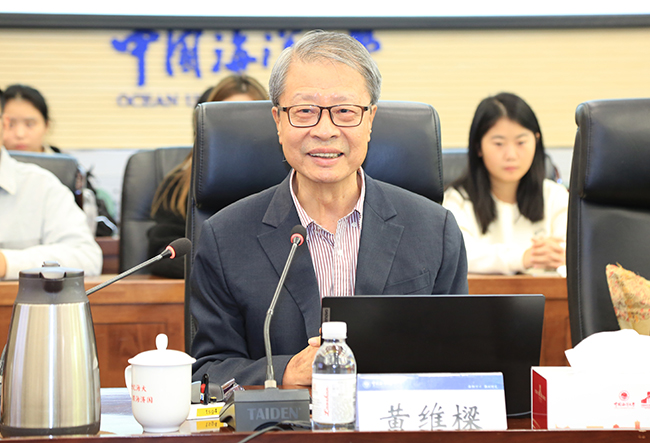
On the morning of October 21, Professor Wong Wai-leung delivered an academic lecture titled “Wang Meng: Forever Young—from Long Live Youth to Sunset Glow Still Fills the Sky.” He reviewed Wang Meng’s literary career and artistic achievements spanning more than seven decades through nine aspects, including his prolific output, love of life and humanity, artistic innovation, exceptional intellect, and enduring youthfulness, among others. In a lively atmosphere, Wang Meng, Wong Wai Leung, Shan Sanya, and Chen Jie engaged in an in-depth exchange with students and responded to their questions.