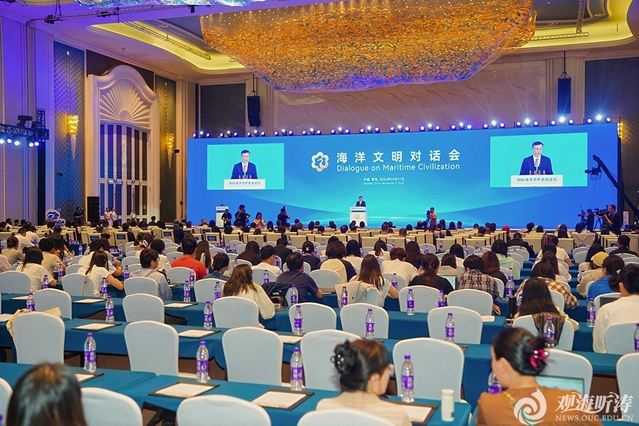
On September 17, the Dialogue on Maritime Civilization of the 2026 Global Ocean Development Forum, hosted by Ocean University of China (OUC), was held in Qingdao West Coast New Area. Under the theme “Connectivity and Mutual Learning: Maritime Civilization in the Global Era,” scholars and guests from more than 20 countries and regions across Asia, Europe, the Americas, Africa, and Oceania exchanged views on the transmission of maritime civilization, the integrated development of ports, industries, and cities, ecological conservation, and cultural tourism. Through three segments—addresses, thematic dialogue, and the release of research outcomes—the event highlighted three dimensions of the ocean’s significance: forging consensus among civilizations with the ocean as a shared bond; connecting maritime civilization with the integrated development of ports, industries, and cities; and supporting efforts to build a maritime community with a shared future through think-tank outputs.
Officials from the Ministry of Natural Resources and Shandong Province, Zhang Junfeng, President of OUC, Ryu Chang-soo, Consul General of the Republic of Korea in Qingdao, Maksim Dankin, Director General of Russia’s Project Office for Arctic Development, and Liu Yuzhu, Chairman of the China Foundation for Cultural Heritage Conservation, attended and addressed the event. Li Yan, Vice President of OUC, moderated the addresses.
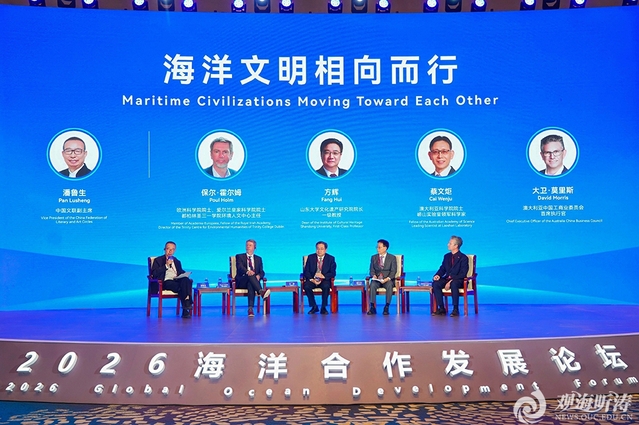
Pan Lusheng, Vice President of the China Federation of Literary and Art Circles, moderated the first thematic dialogue, titled “Maritime Civilizations Moving Toward Each Other.” Poul Holm, Member of Academia Europaea and Director of the Trinity Centre for Environmental Humanities of Trinity College Dublin; Fang Hui, Dean of the Institute of Cultural Heritage of Shandong University and a First-Class Professor; *********, Leading Scientist at Laoshan Laboratory; and David Morris, Chief Executive Officer of the Australia China Business Council; and other guests from China and abroad held an in-depth discussion on the historical development and contemporary practices of maritime civilizations.
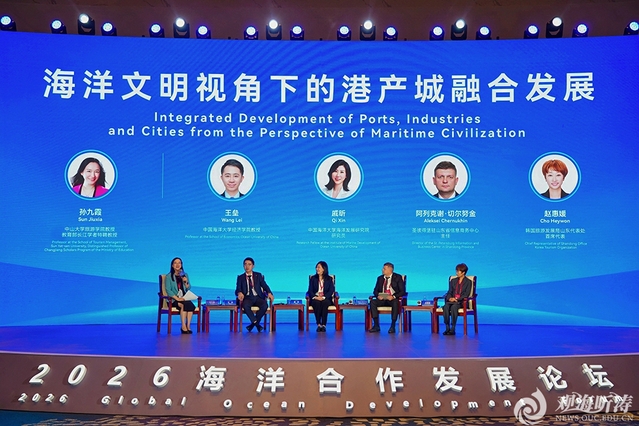
Professor Sun Jiuxia of the School of Tourism Management at Sun Yat-Sen University moderated the second thematic dialogue, titled “Integrated Development of Ports, Industries, and Cities from the Perspective of Maritime Civilization.” Participants included Wang Lei, Professor at OUC’s School of Economics; Qi Xin, Research Fellow at OUC’s Institute of Marine Development; Aleksei Chernukhin, Director of the St. Petersburg Information and Business Center in Shandong Province; and Cho Heywon, Chief Representative of the Shandong Office of the Korea Tourism Organization. They exchanged views on approaches to and practices in the integrated development of ports, industries, and cities.
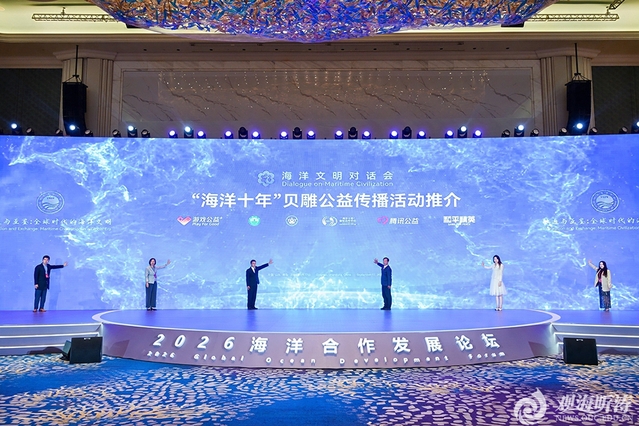
Jiang Qiubiao, Deputy Secretary of the CPC OUC Committee, moderated the project presentations and thematic reports. Deng Yong, Vice Mayor of Weihai, shared the city’s practices in advancing marine ecological conservation. Xiu Bin, Academic Director of OUC’s Research Center for Maritime Culture and Chinese Civilization, presented China’s research achievements in maritime cultural development during the 14th Five-Year Plan period. Pan Xinchun, Deputy President and Secretary General of the China Oceanic Development Foundation, presented a report titled “Advancing A Maritime Community with A Shared Future through Hehe Culture: Practices and Insights.” And Ma Da, Dean of the Advanced Institute of Culture and Tourism at Qingdao University, delivered a report titled “The Economic Value of the Northern Maritime Silk Road in Northeast Asia.”
Representatives from Qingdao West Coast New Area, the China Federation of Literary and Art Circles, the China Siyuan Foundation, and Tencent jointly presented an Ocean Decade public-interest outreach campaign featuring shell carving. Professor Liu Jia of OUC’s College of Management presented the “Blue Ecosystem” research project for the high-quality development of marine tourism. Professor Ma Shuhua of OUC’s Research Center for Maritime Culture and Chinese Civilization introduced the “Shandong Maritime Cultural Symbols” project. The project has identified 20 candidates through submissions collected from multiple channels, several rounds of expert review, and quantitative assessment. Following public consultation and final expert evaluation, ten symbols will be selected as the first batch of Shandong Maritime Cultural Symbols, helping transform the province’s rich maritime cultural resources into cultural symbols that can be clearly interpreted, effectively communicated, and put to practical use.
On September 18, the Second Symposium on Maritime Culture and Chinese Civilization was held as a major academic component of the Dialogue on Maritime Civilization. Comprising a keynote forum and three sub-forums, the symposium brought together more than 100 scholars from universities and research institutions across China for in-depth discussions on topics including the literary and historical origins of maritime culture, digital intelligence in a blue ocean, and maritime cultural tourism.