Recently, a research team led by Professor Sui Zhenghong from the Key Laboratory of Marine Genetics and Breeding of the Ministry of Education, Ocean University of China (OUC) published an important research article entitled “A C2H2 zinc finger transcription factor links a GWAS locus to linear growth in Gracilariopsis lemaneiformis via MCM helicase activation” in New Phytologist. In this study, the team established, for the first time, a direct molecular link between a genetic variation signal identified by genome-wide association studies (GWAS) and the growth phenotype of the red alga Gracilariopsis lemaneiformis.
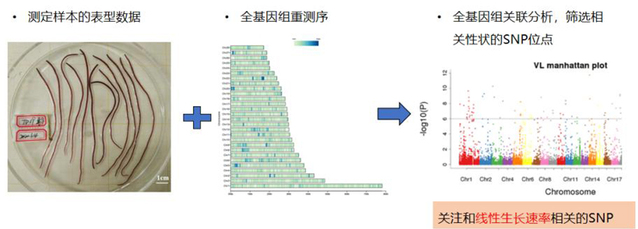
Gracilariopsis lemaneiformis is a prominent red alga with substantial economic importance in China. Its linear growth rate directly affects biomass accumulation and cultivation efficiency. However, the genetic regulatory mechanisms underlying this trait have long remained poorly understood. In the team’s previous GWAS-based research, a nonsynonymous single-nucleotide polymorphism (SNP, Gln672Lys) in the previously uncharacterized gene LXC001294 was found to be significantly associated with the linear growth rate of Gracilariopsis lemaneiformis. Through multilayered experiments, including ChIP-seq, RNA-seq, yeast one-hybrid assays, dual-luciferase reporter assays, electrophoretic mobility shift assays (EMSA), and flow cytometry, the research team further revealed that this SNP alters the DNA-binding affinity of the C2H2 zinc finger transcription factor LXC001294. This change enhances its transcriptional activation of genes related to the MCM2–7 replicative helicase complex, promotes DNA replication and cell cycle progression, and ultimately increases the linear growth rate of the alga. The study systematically clarified a complete regulatory pathway of “SNP—transcription factor—DNA replication machinery—cell cycle—growth rate,” providing a new theoretical basis and important molecular markers for molecular design breeding in Gracilariopsis lemaneiformis.
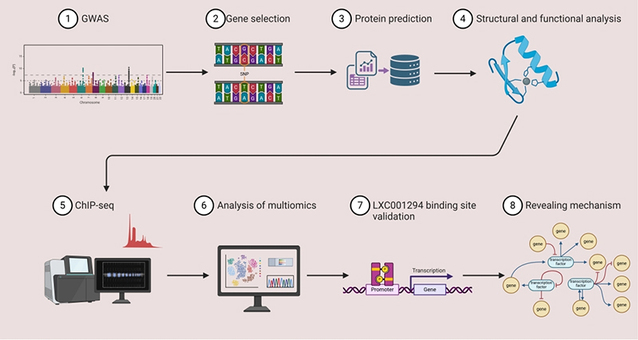
This study used an integrated approach combining bioinformatic analysis, yeast transactivation assays, and subcellular localization through tobacco transient expression to systematically characterize the protein properties of LXC001294. The researchers mapped its genome-wide binding landscape using chromatin immunoprecipitation sequencing (ChIP-seq), screened core target genes by integrating transcriptomic data from the fast-growing strain YT13 and the slow-growing strain QHD9, and validated the regulatory relationships using yeast one-hybrid and dual-luciferase reporter assays.
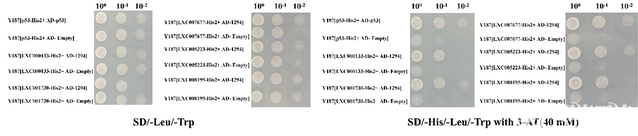
The study confirmed that LXC001294 is a nuclear-localized C2H2 zinc finger transcription factor. This transcription factor directly targets and upregulates the expression of five minichromosome maintenance (MCM) helicase family genes, thereby enhancing DNA replication licensing and accelerating cell cycle progression. For the first time in red algae, this study provides a complete analysis from a GWAS signal to a functional gene and then to its downstream regulatory network. It reveals the molecular mechanism by which the C2H2 zinc finger transcription factor LXC001294 promotes the linear growth rate of Gracilariopsis lemaneiformis by activating the MCM replication helicase complex. This study not only provides key targets and molecular markers for the molecular breeding of Gracilariopsis lemaneiformis, but also offers a new research paradigm for analyzing complex phenotypic traits in other non-model macroalgae.