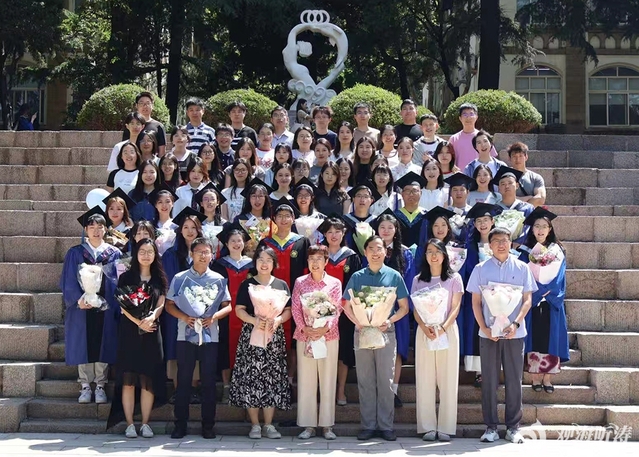
On December 4, 2025, the research team led by Professor Zhang Xiaohua from the College of Marine Life Sciences, the Frontiers Science Center for Deep Ocean Multispheres and Earth System, and the Institute of Evolution and Marine Biodiversity, Ocean University of China (OUC), published their latest findings online in Advanced Science. The article is entitled “Two Novel S-methyltransferases Confer Dimethylsulfide Production in Actinomycetota”.
Hydrogen sulfide (H2S), methanethiol (MeSH), and dimethylsulfide (DMS) are major sulfur gases in the ocean, playing crucial roles in global sulfur cycling, chemotaxis, and climate regulation. Microorganisms can S-methylate cytotoxic H2S and MeSH to yield non-toxic DMS. This process is mainly catalyzed by MddA in terrestrial environments and by MddH in marine environments. However, the potential of the bacteria abundant in both marine and terrestrial environments, Actinomycetota, has long been underestimated due to unknown Mdd enzymes.
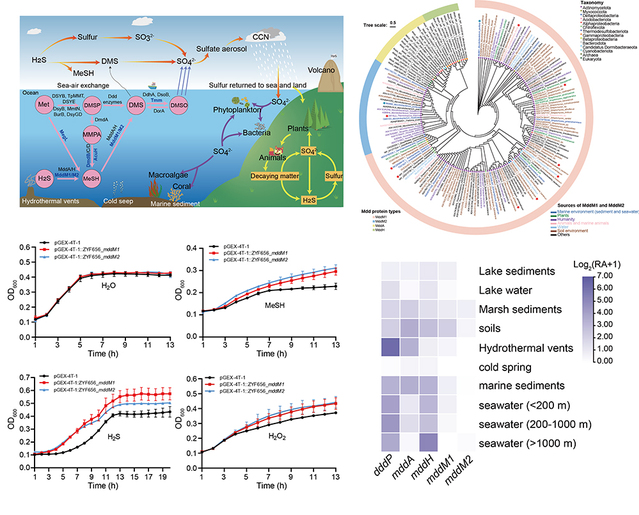
Building on this background, Professor Zhang Xiaohua’s team employed genomic library construction and gene knockout approaches to discover and identify two methyltransferases that are abundantly present in Actinomycetota, MddM1 and MddM2. They systematically characterized the catalytic properties of these two enzymes and found that their catalytic efficiencies are higher than that of MddA but lower than that of MddH. Functional experiments showed that transcription of mddM1 and mddM2 is induced by H2S, MeSH, and oxidative stress, and that these enzymes convert toxic H2S and MeSH into non-toxic DMS, thereby effectively alleviating oxidative stress and performing a clear physiological detoxification function. MddM1 and/or MddM2 are in >50% of Actinomycetota, including the model Streptomyces species, S. venezuelae, but are also seen in some Chloroflexota, Acidobacteriota, and Proteobacteria. mddM1 is always more abundant than mddM2 in diverse environments and is prevalent in soils and marsh sediments. This study highlights the significance of H2S- and MeSH-dependent DMS production, and, principally, of Actinomycetota in global DMS production and sulfur cycling.
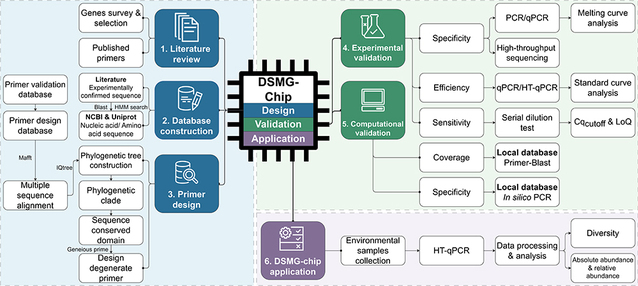
In addition, the research team also published another article entitled “DSMG-Chip: A High-Throughput Degenerate qPCR Chip for Profiling Microbial DMSP and Related Organic Sulfur Metabolic Genes in Diverse Environments” in Environmental Science & Technology. In this work, they developed a high-throughput qPCR (HT-qPCR) chip, the DSMG-chip, enabling the synchronous absolute quantification of 27 organosulfur metabolic genes. Researchers integrated 42 degenerate primer sets into the DSMG-chip and, together with intelligent database construction and phylogenetic analysis, established a complete technical framework from gene detection to environmental applications. Based on evaluations of specificity, sensitivity, and accuracy, the authors confirmed the reliability of the DSMG-chip on complex environmental samples. With multi-dimensional bioinformatic analyses, they further revealed the distribution patterns and ecological significance of organosulfur metabolic genes across the global ocean.